Understanding your MY GUUT™ report
Your 28-page report arrives as a password-protected document. Here's what each part means.

Diversity
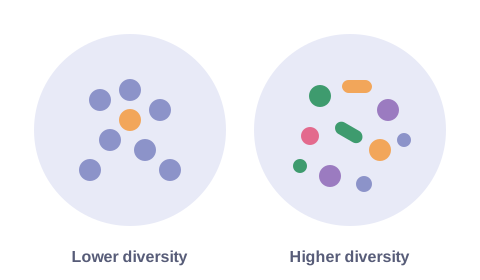
Your report gives you a Shannon index. It combines how many different species you carry with how evenly they're spread. A gut where a few species dominate scores lower than one with many species in balance.
In research, higher diversity is generally linked with better gut health, and a varied, plant-rich diet tends to support it.
Enterotype
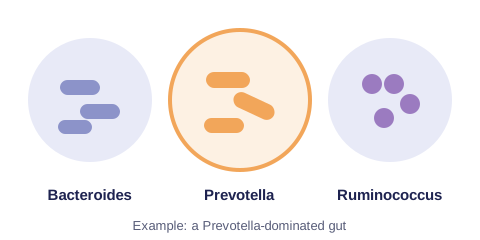
Most people's gut bacteria fall broadly into one of three groups, named after the bacteria that dominate: Bacteroides, Prevotella or Ruminococcus.
Enterotypes are linked with long-term eating patterns. A Prevotella-dominated gut, for example, is more common in people who eat plenty of fibre-rich plant foods.
Balance scores
Dysbiosis index
A single score showing whether the balance of your gut bacteria leans towards beneficial or less helpful organisms.
Firmicutes to Bacteroidota ratio
The balance between the two largest groups of gut bacteria. It's widely reported, but what it means for health is still debated in research, so it's best read alongside your other results.
Key species groups
Your report lists named species in four groups and compares each with a reference range.
Probiotic species
Types of bacteria, such as some Lactobacillus and Bifidobacterium species, also found in fermented foods and probiotic products.
Butyrate-producing species
Bacteria that ferment fibre into butyrate, a short-chain fatty acid that is the main fuel for the cells lining your colon.
Mucin-associated species
Bacteria associated with the mucus layer that lines and protects your gut wall.
Sulphate-reducing species
Bacteria that produce hydrogen sulphide gas. In larger numbers, research has linked them with gut irritation.

Your diet suggestions
The report suggests which types of fibre may feed the organisms you're low in, with a realistic timescale for change. Gut bacteria shift gradually, so these are changes to build over weeks and months.
Tendencies are population links. Where the report mentions a tendency, that's a statistical association seen across populations, not a finding about you personally.

Putting your report into practice
Your report is a starting point. Some people share it with a dietitian, nutritionist or personal trainer to plan changes, and pair new eating habits with regular activity.
If you have a medical condition or take regular medicines, talk to your GP before making big changes to your diet.
Get to know your gut
One sample, a detailed picture of your gut bacteria, and diet ideas you can act on.
- Over 70 bacterial genera, analysed to ISO 15189 standards
- Diversity, dysbiosis index and enterotype
- 28-page report with personalised diet suggestions
- Free delivery in 2 working days, and free return postage